
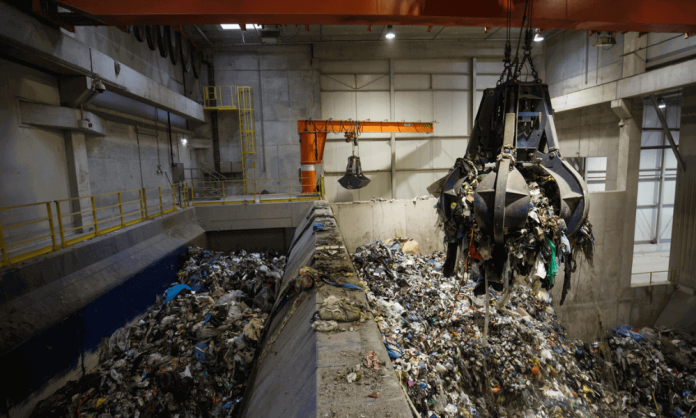


The Sustainable and Inclusive Economic Development for Decent Employment In Nigeria Programme (SEDIN) – an initiative of the German Development Agency (GIZ) has trained and empowered waste collectors with high-tech devices to improve the efficiency and effectiveness of waste sorting in the country.
This initiative, carried out by GIZ in partnership with trinamiX and BASF West Africa, aims to enhance the capabilities of waste collectors under the Waste Pickers Association of Nigeria (WAPAN) by providing both practical training and innovative technology.
According to Weert Borner, German consul general to Lagos, the project demonstrates how innovation and collaboration can address Nigeria’s waste management challenges and create new opportunities.
Borner, who was represented by Jochen Schindelarz, vice consul of economic and cultural affairs, at the one-day training programme organised recently in Lagos, said that the initiative is particularly meaningful because it is working with the true change-makers of the Nigerian circular economy.
“To the members of WAPAN, your work is essential. You are the heart of a more inclusive and sustainable future,” he said at the MoU signing with trinamiX.
“Your daily efforts are not only helping to clean the environment, but are building the foundation for a stronger and resilient future. In Germany, we take recycling seriously,” he added.
He noted that Germany has long recognised that waste is not waste, but potential, saying that plastics, textiles, and electronics waste materials hold value when they are properly sorted and reused as they fuel innovation, resource efficiency and economic opportunity.
With the support of German technology, such as the handheld sorting device developed by trinamiX, and the commitment to skills development, this programme begins today with the training of waste pickers, he said.
According to him, the training will equip participants not only with the tools to do their work but the knowledge and confidence to improve their income.
“When waste is sorted more accurately, it becomes more valuable to increase the value of waste, to increase the value of work. This is how we connect technology with livelihoods and sustainability with dignity,” he said.
Also, Markus Wauschkuhn, cluster coordinator at GIZ, emphasised that effective sorting of waste in Nigeria has a huge financial gain yet untapped.
Wauschkuhn said that GIZ recognised the potential in the waste management sector and the environmental and social impact, which led to the development of the technology for waste pickers.
“We have the resolve to enhance productivity, improve incomes, and promote decent employment to informal workers.” “To this end, GIZ initiated a partnership with the WAPAN, German technology firm trinamiX, and BASE West Africa to promote improved waste sorting practices with handheld sorting devices.”
He said that the initiative will reach all 774 local government areas across the country, noting that the initiative will provide technical tools and deliver targeted capacity-building interventions to enhance the skills of waste collectors.
“It particularly targets women and youth, identified as entrepreneurs with strong social and economic impact potential,” he said.
“Through this partnership, GIZ continues to promote innovative, community-driven solutions, systemic challenges in the waste management sector,” he added.
Susanna Loecher, product & marketing manager circular economy, trinamiX, at a virtual presentation said effective waste management is a big challenge with most countries globally, noting that only 9 percent of waste is currently recycled.
She noted that by training and continuous education and technology, Nigeria waste pickers can effectively and efficiently transform waste into re-usable products.
Loecher added that trinamiX is happy to be part of the unique collaboration aimed at promoting improved waste sorting practices in the country.
