
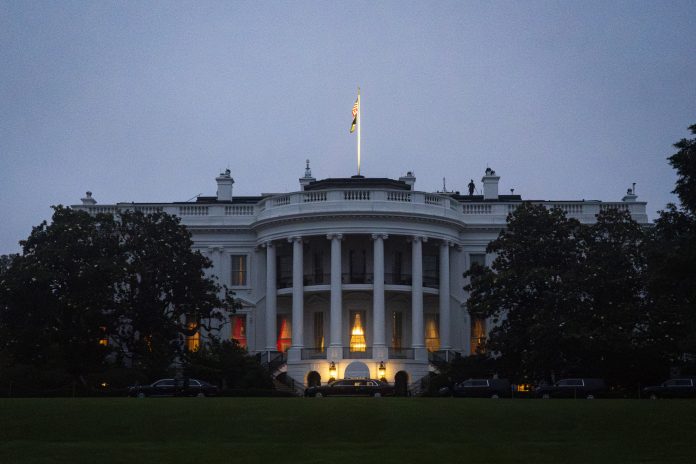


As an unprecedented conflict between Israel and Iran dragged on into a fifth day, President Donald Trump has increasingly indicated that he was seriously considering a direct intervention in the fight.
And while the Pentagon has thus far maintained that U.S. forces were operating in a purely “defensive posture,” while also assisting Israeli interceptions of Iranian missiles, evidence is mounting that the White House is marching toward military action against the Islamic Republic.
Trump’s Threats Intensify
Just prior to Israel launching its large-scale campaign on Thursday, Trump had signaled a willingness to continue nuclear negotiations with Iran, the sixth round of which had been scheduled to be held in Oman last Sunday. Even after the initial Israeli strikes began, Trump called on Tehran to double down on efforts to reach an agreement.
As of Monday, however, Trump has adopted a notably more ominous tone. Shortly before his abrupt exit from the G7 meeting being held in Canada, he called on residents of Tehran, home to nearly 10 million people, to immediately evacuate, and later met with top national security officials at the White House Situation Room.
The president further hardened his language on Tuesday, claiming on his Truth Social platform that “we have complete and total control of the skies over Iran,” appearing to suggest the U.S. was already a party to the conflict. He even alleged to know the exact location of Iranian Supreme Leader Ayatollah Ali Khamenei, referring to the top Iranian authority as “an easy target,” though, “we are not going to take him out (kill!), at least not for now.”
“But we don’t want missiles shot at civilians, or American soldiers,” Trump continued. “Our patience is wearing thin. Thank you for your attention to this matter!”
He then called for “UNCONDITIONAL SURRENDER!” in a follow-up post apparently aimed at Iran.
Staff Sergeant Gerald R. Willis
US Builds Up Regional Footprint
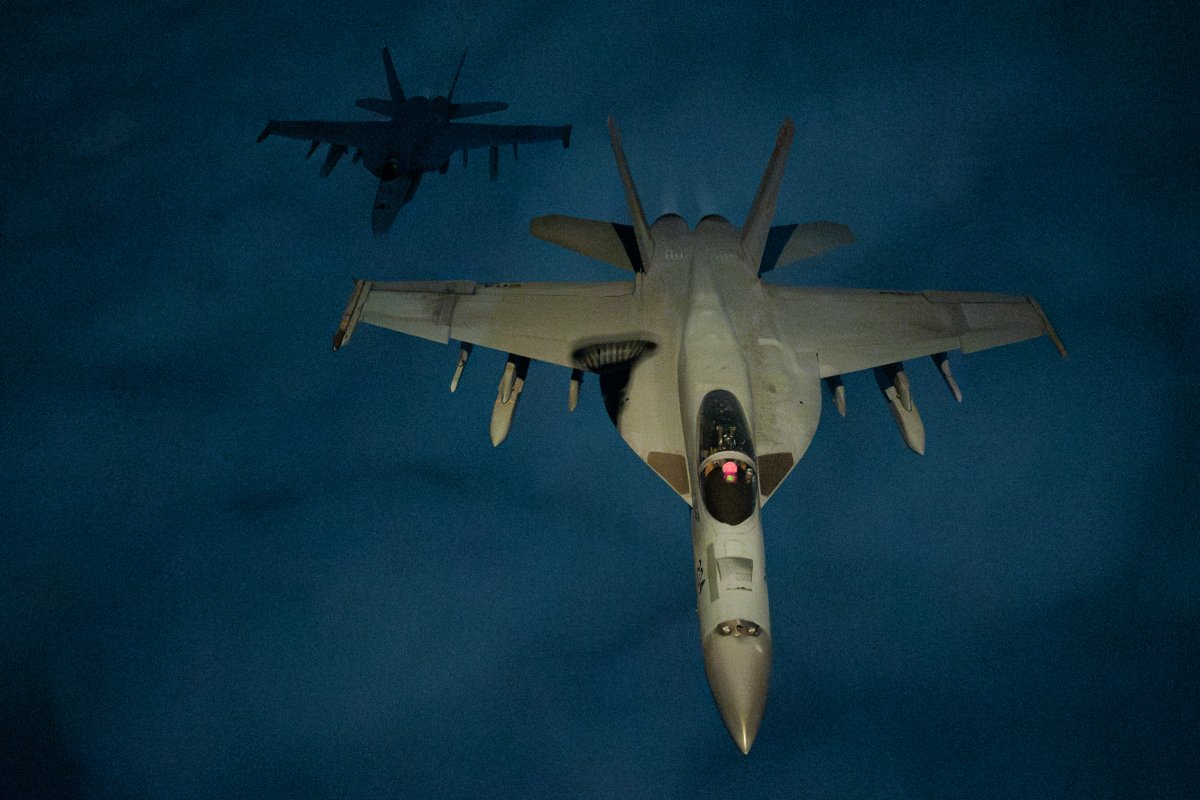
Over the weekend, aviation watchers noticed around two dozen of U.S. Air Force KC-135R and KC-46A tankers being deployed to Europe. Such aircraft are necessary to refuel warplanes conducting forward operations from afar and reports later tied their movement to tensions building in the Middle East.
Then, on Monday, the USS Nimitz aircraft carrier diverted from the South China Sea to the Middle East, where it would join the USS Carl Vinson carrier strike group that entered the Arabian Sea in April.
“Consistent with the duty to protect U.S. forces in the Middle East, Secretary of Defense Pete Hegseth directed the Nimitz Carrier Strike Group to the U.S. Central Command (CENTCOM) area of responsibility to sustain our defensive posture and safeguard American personnel. In the U.S. European Command (EUCOM) AOR the U.S. Navy continues to conduct operations in the Eastern Mediterranean in support of U.S. national security objectives,” a defense official told Newsweek.
If the U.S. were to conduct a strike on Iran’s heavily fortified underground Fordow nuclear enrichment facility, the weapon most widely believed to be involved would be the GBU 57/B Massive Ordnance Penetrator, which Israel was not known to possess. The only aircraft certified to carry the 15-ton bomb is the U.S. B-2 stealth bomber, capable of delivering strikes from bases 6,000 miles away.
The closest known B-2 base to Fordow is the U.S. Naval Facility Diego Garcia, the remote Indian Ocean island base where up to six of the elite bombers were deployed back in March.
Meanwhile, Missouri’s Whiteman Air Force Base, home to the B-2 bomber fleet, announced Monday on social media that it was taking “increased security measures” in line with directives from U.S. Northern Command to all military facilities within the area of responsibility.
Elsewhere in the Middle East, other U.S. staff and family members that could potentially be exposed to hostile fire on the ground have reportedly been authorized to leave posts, including in Bahrain, Iraq and Kuwait, in the lead up to Israel’s opening strikes last Thursday.
U.S. Central Command is estimated to have roughly 40,000 personnel in the Middle East.
State Department Forms Task Force
As for other U.S. citizens looking to leave the region, they are being asked to contact a new task force announced Tuesday by State Department spokesperson Tammy Bruce.
“The task force is a group of people who are working taking the calls of people, of American citizens around the world, making sure that they get connected with what they may need that region,” Bruce said.
Such an initiative she said, “is something that the State Department does when there’s a situation that requires it, and this is one of those times.”
Before taking questions, Bruce said it would be a “little bit of a different day for the briefing,” as “there will be less than I can answer for you because of the circumstances that we’re dealing with around the world.”
Throughout the press conference, she declined to “characterize what President Trump says or tweets,” including whether or not he sought to support Israel’s strikes against Fordow, or even sought to pursue regime change in Iran.

Al Drago/Getty Images
Diplomacy Fades
Bruce also would neither confirm nor deny whether or not the U.S. remained open to diplomacy with Iran at this stage.
Neither the U.S. nor Iran has announced any new diplomatic overtures since Iranian Foreign Minister Abbas Araghchi announced the suspension of nuclear talks over Israel’s sweeping campaign of strikes against sites and personnel tied to Iran’s military and nuclear program.
Egyptian Foreign Minister Badr Abdelatty, however, did hold separate conversations on Tuesday with Araghchi and Trump’s special envoy for the Middle East Steve Witkoff. A readout of the conversation did not mention any messages passed between the U.S. and Iranian diplomats but contained an urgent plea from Abdelatty to avoid further escalation.
Prior to the Israeli strikes and breakdown of negotiations, Araghchi had stated that Iran would only accept a nuclear agreement that allowed the country to continue enriching uranium, albeit at far lower levels incapable of producing a bomb. While Trump signaled earlier into the talks that his only condition for a deal would be one in which Iran could not obtain nuclear weapons, he later adopted an explicit line of preventing Tehran from conducting any enrichment activity at home.
An Israeli official told Newsweek shortly after the Israel Defense Forces (IDF) launched its campaign on Thursday that Israel had assessed the Islamic Republic had obtained enough material to produce 15 nuclear bombs.
Iranian officials have since repeatedly vowed stronger retaliatory measures against Israel as they seek to answer Israeli strikes with salvos of missiles and drones. They have also threatened Iranian forces would target U.S. military facilities in the region should Washington join the fight, something Trump and senior officials have continued to warn against.
Iran is not known to have conducted any strikes on U.S. military facilities since the outbreak of the latest conflict.
Vance’s New Tone
Vice President JD Vance is often viewed as one of the most senior advocates of restraint in the Trump administration. Like Trump, he has criticized past administrations for becoming mired in foreign conflicts, a key voter message he hammered on the campaign trail last year.
Back in March, Vance was among the few senior officials to initially doubt the utility of the decision to begin launching strikes against Iran’s Yemeni ally, Ansar Allah, also known as the Houthi movement, according to Signal chats leaked by The Atlantic.
On Tuesday, as Trump ramped up his rhetoric against Iran, Vance issued a lengthy personal appeal in defense of the president’s decision-making process on X, formerly Twitter.
Look, I’m seeing this from the inside, and am admittedly biased towards our president (and my friend), but there’s a lot of crazy stuff on social media, so I wanted to address some things directly on the Iran issue:
First, POTUS has been amazingly consistent, over 10 years, that…
— JD Vance (@JDVance) June 17, 2025
He said the president “may decide he needs to take further action to end Iranian enrichment,” while acknowledging that “people are right to be worried about foreign entanglement after the last 25 years of idiotic foreign policy.”
“But I believe the president has earned some trust on this issue. And having seen this up close and personal, I can assure you that he is only interested in using the American military to accomplish the American people’s goals,” Vance continued. “Whatever he does, that is his focus.”